How Automated Follow-Up Funnels Help Service Businesses Recover Lost Leads
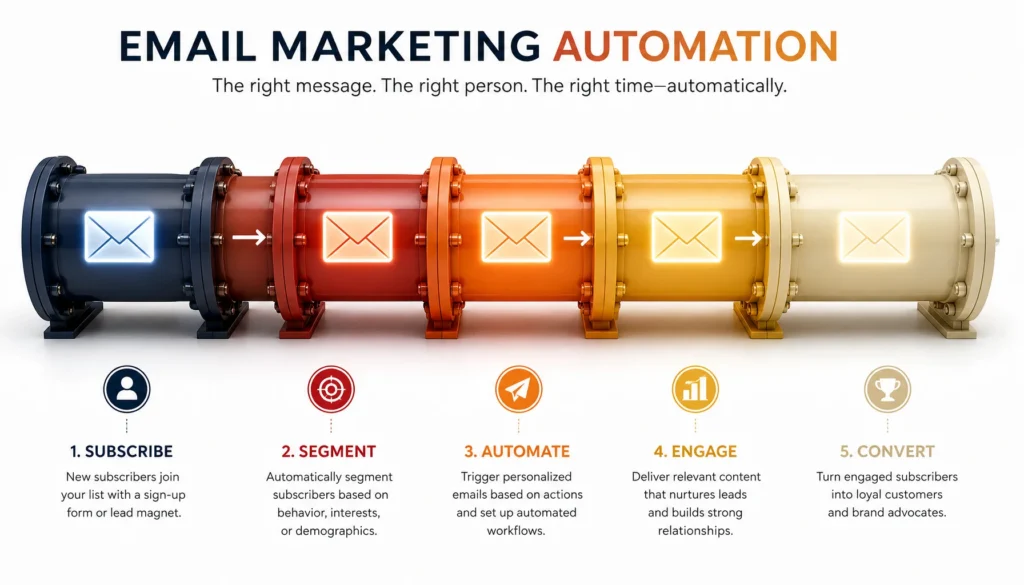
How Automated Follow-Up Funnels Help Service Businesses Recover Lost Leads
A surprising amount of lead loss happens after the first enquiry, not before it.
People fill out the form, send the message, call once, or click through to the contact page. Then the business gets busy, replies late, replies inconsistently, or forgets to do anything structured with the lead at all.
That is where automated follow-up funnels earn their keep.
They do not replace human sales conversations. They simply make sure the business does not waste good intent. For a service business, that matters because the real opportunity is often sitting in the first 24 hours after someone raises a hand.
If the website itself is already leaking enquiries, that needs attention too. A related guide on why your website may be losing leads covers the clarity, trust, and conversion issues that often sit upstream of the follow-up problem.
What a follow-up funnel actually is
A follow-up funnel is a planned sequence of messages and tasks that helps a lead move from interest to conversation to action.
For service businesses, that usually means a mix of:
- a fast acknowledgement so the person knows the enquiry landed
- a short message that explains what happens next
- a useful second touch with proof, examples, or a relevant service link
- a reminder or check-in if the lead goes quiet
- a human handoff when the lead is ready for a real conversation
The point is not to spam people until they give in. The point is to stay present, useful, and easy to deal with while the lead is still warm.

Why manual follow-up leaks opportunities
Manual follow-up sounds simple until the business gets busy.
Then the cracks appear:
- one person responds quickly while another forgets
- messages get sent at random intervals
- new leads are handled differently depending on who saw them first
- promising enquiries cool off before anyone gives them proper attention
That inconsistency is expensive because service businesses rarely lose leads in one dramatic moment. They lose them in small delays and weak handovers.
Salesforce’s guidance on lead management makes a useful point here: good follow-up is about consistency, not just enthusiasm. Campaign Monitor also describes lead nurturing as an automated, personalised journey that helps move people along at a more natural pace.
A simple funnel structure that works for most service businesses
Most businesses do not need an elaborate sequence to start with. A practical first version is enough.
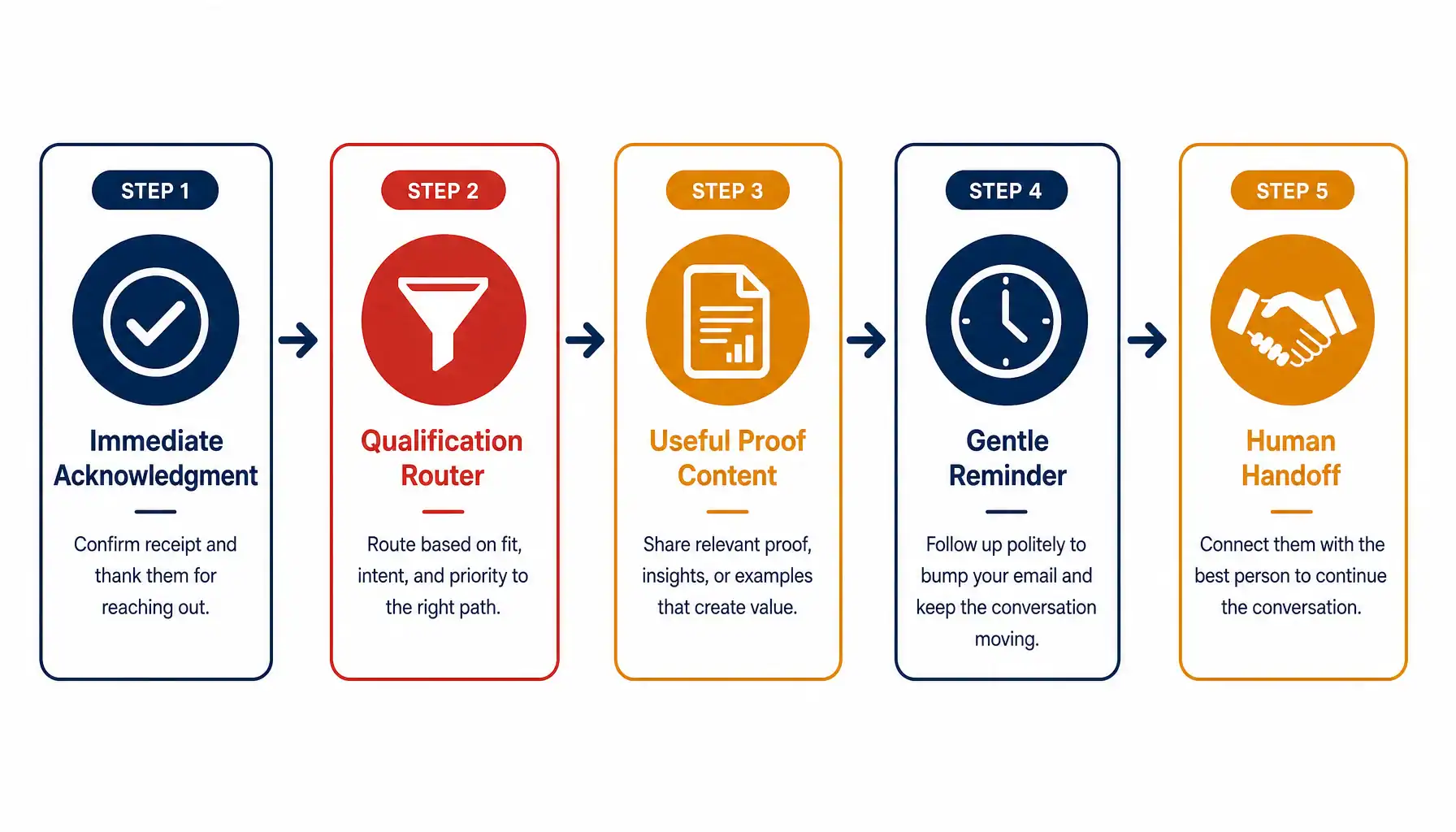
1. Immediate acknowledgement
Send a short email or SMS as soon as the enquiry lands. Confirm that the message was received, say when the person can expect a reply, and make the next step obvious.
This is where speed matters most. HubSpot’s discussion of follow-up email automation is a good reminder that workflows can trigger responses the moment a form is submitted, which removes the awkward lag that so often kills momentum.
2. Qualification or routing
If the business needs a few details before quoting or booking, ask for them in a low-friction way. Keep it simple. The goal is not to build a questionnaire; it is to avoid back-and-forth later.
3. Useful proof
Once the lead has had a moment to settle, send something genuinely helpful: a relevant service page, a short case study, a FAQ, or a page that answers the most common objections.
For example, a lead who inquires about recurring support might benefit from a link to Automated Email Funnels or the broader Email & Customer Retention Marketing service page, depending on what the business is offering.
4. A gentle reminder
Some leads are not saying no. They are just busy. A second touch a few days later can recover people who meant to reply but got pulled into work, family, or decision overload.
5. Human handoff
When someone shows real interest, the automation should hand off cleanly to a person. The goal is to reduce admin, not eliminate the conversation.
Where email, SMS, and CRM each fit
Email is usually the backbone because it is easy to scale, easy to personalise, and suitable for detailed follow-up.
SMS can be useful when the business needs a fast, brief nudge and the customer has given permission to be contacted that way. It is especially helpful for missed calls, urgent quote requests, and short confirmation messages.
A CRM or workflow tool is the part that keeps everything from falling apart. It can trigger the sequence, track the stage, and stop the same lead from being treated like a brand-new enquiry every time someone changes tabs.
This is where automation becomes commercially useful: not because it is flashy, but because it makes the follow-up process repeatable.
What to measure
A follow-up funnel should be judged on outcomes, not just on whether the emails were sent.
The most useful metrics are simple:
- how fast the first response goes out
- how many leads reach a real conversation
- how many go cold before a human speaks to them
- how many previously lost leads re-engage
- whether the follow-up path leads to more booked calls, quote requests, or qualified enquiries
If the funnel is running but nobody is measuring the result, the business is still guessing.
That is one reason follow-up belongs close to website optimization and tracking work, not off in a separate corner where nobody compares notes.
Common mistakes to avoid
Most bad funnels fail for familiar reasons:
- they sound generic
- they over-explain instead of guiding
- they send too many messages too quickly
- they do not hand off to a human at the right time
- they forget to link back to a useful service page
- they are built once and never reviewed
A good sequence should feel calm and useful. If it feels like pressure, it is probably too aggressive.
Why this matters for service businesses
For most service businesses, the lead is not a one-off transaction. It is a trust decision.
The prospect is asking, sometimes silently: Can this business solve my problem? Will they respond properly? Are they worth my time?
A well-built follow-up funnel helps answer those questions before the lead drifts away.
That is why the commercial value is often bigger than it first looks. It does not just recover lost leads. It protects the value of the leads the website is already earning.
Need a follow-up system that actually recovers leads instead of letting them go cold?
If you want help designing a practical follow-up funnel for your service business, talk to Effortless Web about Automated Email Funnels or get in touch and we can work through the best fit.