Google Business Profile Mistakes That Cost Local Enquiries

Google Business Profile Mistakes That Cost Local Enquiries
If your Google Business Profile looks half-abandoned, customers notice.
They may not send you a polite email explaining that your hours look outdated, your reviews feel stale, and your profile gives off the energy of a shop that forgot to switch the lights back on after lunch. They usually just compare you with someone else and move on.
That is why Google Business Profile matters so much.
For a lot of service businesses, it is one of the first places a potential customer decides whether to call, click, compare, or quietly disappear. Before they ever reach your website, they may already be judging:
- whether the business looks active
- whether the services seem relevant
- whether the reviews feel trustworthy
- whether the details look current
- whether this is worth the effort of contacting at all
And the uncomfortable truth is that most underperforming profiles do not have a mysterious Google problem.
They have a neglected-fundamentals problem.
Why Google Business Profile matters so much now
Google Business Profile sits right at the intersection of:
- local discovery
- maps visibility
- first-impression trust
- reviews
- fast decision-making
Google’s own guidance still says local results are shaped mainly by relevance, distance, and prominence. That is the clearest owner-friendly framework to keep in mind. You can see it directly in Google’s official advice on how to improve local ranking.
That matters in Australia, where local comparison is already well-established, and it also matters in faster-moving or still-maturing markets where businesses that build better local-search habits early can gain an advantage before everyone else wakes up and joins the party.
GBP is not just a listing. It is an active trust surface.
Most businesses do not need tricks. They need stronger basics.
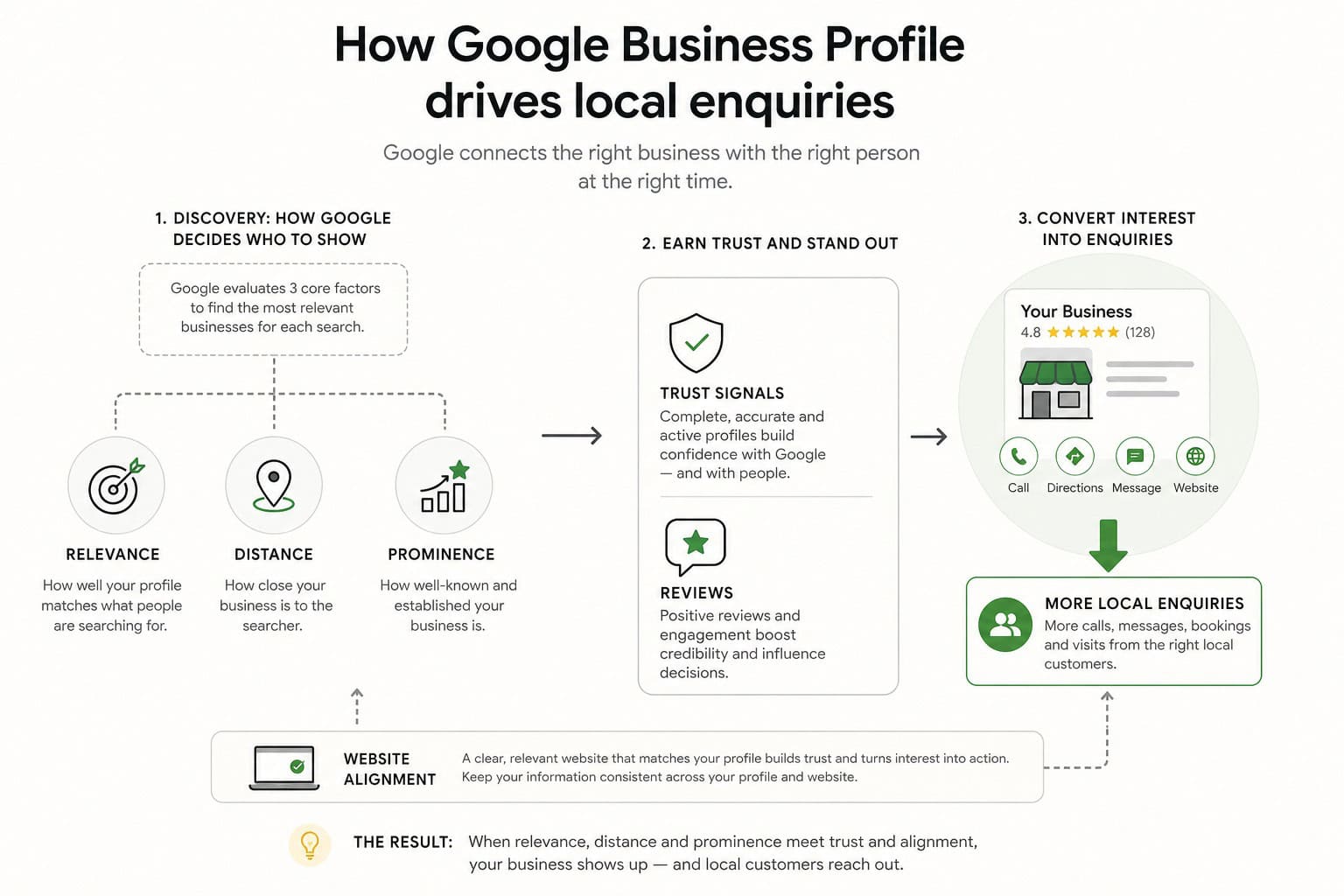
A lot of owners assume that if their profile is not performing, the answer must be hidden somewhere inside the great algorithmic fog.
Usually it is not.
Usually the profile is simply undercooked.
The category is weak. The services are thin. The reviews are stale. The details are inconsistent. The profile looks like it was set up once, tolerated for a while, and then left to gather digital dust.
That is not a Google conspiracy. That is maintenance debt.
1. Weak or wrong category choices
Category choice matters because it helps Google understand what the business actually is.
If the primary category is off, too broad, or chosen carelessly, relevance gets weaker. And if relevance gets weaker, visibility suffers.
Many businesses never revisit category choices once the profile is first created. That is a mistake, especially if the real service focus has shifted over time.
2. Thin or unclear service information
Some profiles technically exist but still do a terrible job explaining what the business actually does.
The business name might be there. The phone number might be there. But the service detail is so thin that a customer is still left guessing.
That weakens both trust and conversion.
A strong profile should make it easier for a person to understand the actual offer and then move toward the right supporting page on the website. This is where strong site structure and content matter too. Clear service pages for SEO & Content Marketing, Content Writing, and Website Optimization & Analytics help reinforce what the profile claims.
3. Stale or inconsistent business details
This is one of the least glamorous problems and one of the most expensive.
If your hours, contact details, service areas, address information, or business description are inconsistent, the trust damage is immediate.
Customers notice.
So do search systems.
A profile should not make people wonder whether the business is still operating the way it says it is.
4. Poor review habits
Reviews matter because they shape both trust and prominence.
They also tell a customer whether the business feels active, current, and credible.
The problem is that many businesses either:
- do not ask consistently
- let the review profile go stale
- ignore responses
- respond in bland ways that add nothing useful
BrightLocal’s Local Consumer Review Survey 2026 is a useful reminder that review freshness matters, not just raw volume. A profile with old praise and no recent activity can still feel neglected.
5. Weak ongoing activity
A profile that never changes starts to feel suspiciously lifeless.
That does not mean you need to treat GBP like a second full-time social platform. It does mean you should not ignore the ongoing signals that show a business is active and responsive.
That includes:
- fresh photos
- up-to-date business details
- attention to Q&A
- useful updates where relevant
- signs that the business is still engaged and present
A neglected profile quietly costs trust while the owner assumes visibility is just getting harder. Sometimes visibility is getting harder. But sometimes the profile just looks like nobody loves it.
6. Weak alignment between the profile and the website
This is where a lot of businesses split the job in half and then wonder why the results feel mediocre.
The profile and the website should reinforce each other.
If the profile creates interest but the website is vague, thin, or poorly structured, trust drops once the click happens. If the website is solid but the profile is weak, you lose opportunities earlier in the journey.
That is why local visibility works better when Google Business Profile, reviews, service pages, and on-site content tell the same story. A stronger Local SEO setup is not just about rankings. It is about making the whole local trust layer feel coherent.
Why this is an opportunity, not just admin
This is the part many businesses miss.
Because so many profiles are neglected, the bar is often lower than people think.
You do not necessarily need a genius-level Google strategy to improve local visibility. You often need a more complete, more accurate, more current, better-maintained profile than the businesses around you.
That is particularly useful for service businesses, where trust, location context, and relevance often matter more than flashy marketing tricks.
What to focus on first
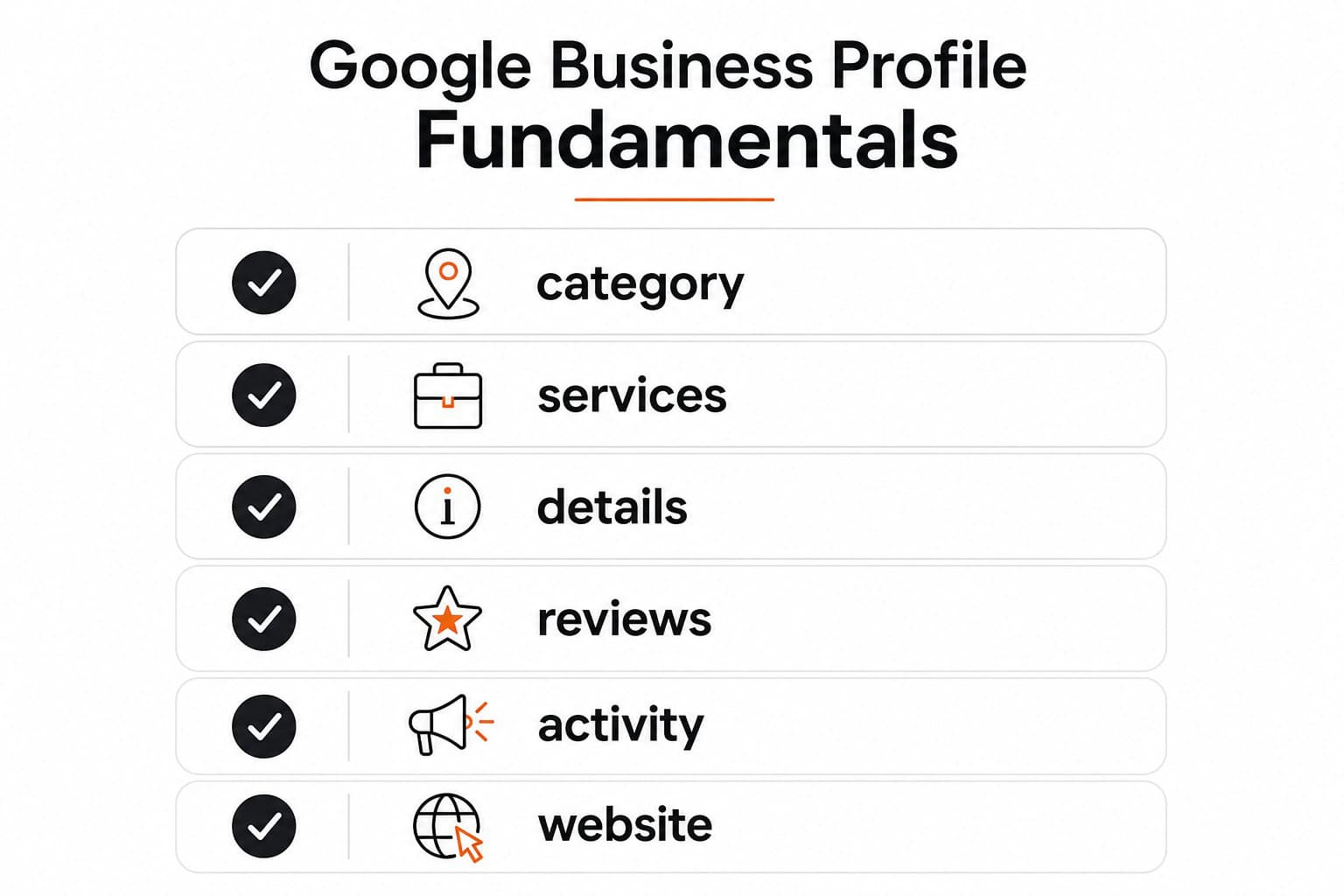
If your profile needs attention, this is the order I would use:
- Fix categories and core business details because the foundations shape relevance and trust.
- Improve service information so the offer is easier to understand.
- Build a better review habit consistently, not as a one-off burst.
- Add stronger photos, updates, and Q&A attention so the profile feels active and current.
- Align profile messaging with the website so the profile and site support each other instead of contradicting each other.
- Maintain it over time because a profile is not a set-and-forget asset.
Final thought
A neglected Google Business Profile can quietly cost leads while owners assume the problem is Google itself.
Sometimes the problem is simpler than that.
Sometimes the business just needs a profile that is more relevant, more complete, more current, and more obviously trustworthy.
And if the website behind it is strong as well, local visibility has a much better chance of turning into real enquiries rather than just another round of digital window shopping.
Need a clearer picture of what your Google Business Profile is costing you?
If you want help reviewing your profile, local trust signals, and how well your website supports local search, get in touch with Effortless Web.