How to Build a Website That Still Performs in AI-Driven Search
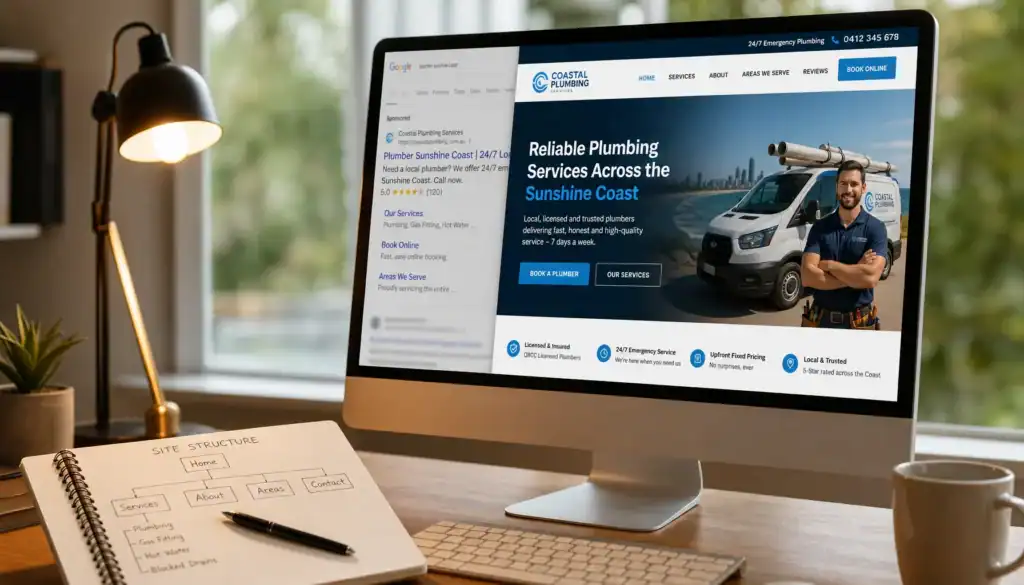
How to Build a Website That Still Performs in AI-Driven Search
Search is changing in a way that is easy to overcomplicate.
People hear “AI-driven search” and immediately jump to tools, prompts, bots, automation, or some other shiny object that sounds like a strategy but isn’t one. The more useful question is simpler: what does a website need to do if search engines are increasingly summarising, comparing, and filtering before the click?
The answer is not “attach more AI.” The answer is to build a site that is clear enough to understand, trustworthy enough to recommend, and useful enough to justify a click or enquiry.
That means the fundamentals matter more, not less.
If you want the bigger picture first, How AI Search Is Changing Lead Generation for Australian Service Businesses explains why this shift matters commercially. This article is the practical follow-up: what to build so the site still performs as the search experience changes.
What “performing” in AI-driven search actually means
For a service business, performance is not just rankings. A site can rank and still underperform if it fails at the commercial parts.
In an AI-shaped search environment, a website needs to do several jobs at once:
- be discoverable for the right searches
- be understandable to search systems and humans
- earn trust quickly
- support a clear next step
- turn the visit into an enquiry, call, booking, or meaningful click
If any one of those fails, the website is weaker than it looks.
That is why “AI readiness” should not be treated as a separate tech project. It is really a combination of content quality, structure, proof, usability, and measurement.
1. Write pages that answer real questions clearly
AI systems are designed to summarise and compare. That means vague, fluffy, or overstuffed pages are less useful than they used to be.
A strong page tells the reader and the search system three things quickly:
- what the business does
- who it is for
- why it is worth paying attention to
That sounds basic because it is basic. But a lot of websites still hide the point behind generic language, decorative headlines, or content that sounds polished but says very little.
For service businesses, the answerable version of a page usually includes:
- a specific headline
- a short opening paragraph that states the offer plainly
- supporting sections for benefits, process, proof, and FAQs
- internal links to the most relevant service page
- a clear CTA that does not make the visitor guess what happens next
If AI search is becoming more answer-like, your site should become more answerable.
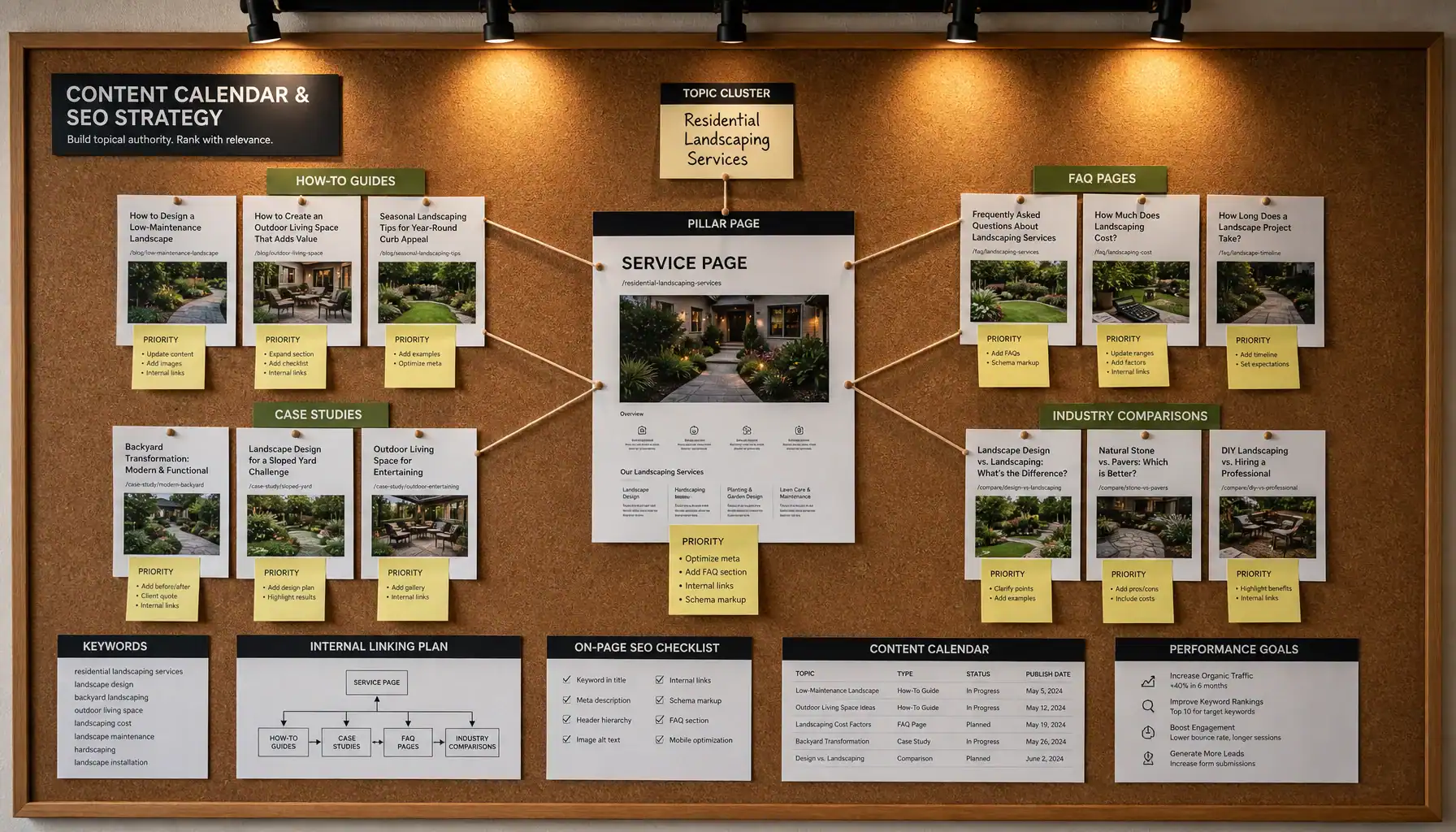
2. Build a structure that makes the business easy to understand
Search systems are better at working with clear architecture than with messy piles of content.
That is why site structure matters so much. A website should not feel like a folder full of unrelated pages. It should feel like a deliberate system.
For Effortless Web’s kind of service business, that usually means:
- one strong homepage
- clean service hubs
- supporting service detail pages
- industry pages where they add genuine value
- blog content that supports the service and industry pages instead of wandering away from them
Search engines and AI summaries both benefit when the site makes its relationships obvious. A visitor should be able to tell which page is the main service, which pages support it, and where the next best click should go.
That is also where internal linking earns its keep. Links help people move through the site, but they also help the site communicate importance and context.
If you build everything as isolated pages, the site becomes harder to interpret. If you build it as a connected system, the value compounds.
3. Make trust visible early
AI-driven discovery does not remove the need for trust. If anything, it raises the bar.
When people see an answer or a summary before the click, the website that wins the visit is often the one that feels most credible the moment it loads.
That means trust signals need to show up early, not hidden at the bottom after a long scroll.
Useful trust signals include:
- specific service descriptions
- real testimonials or reviews
- examples of work or outcomes
- clear business details
- plain-language explanations of process
- signs that the business is established and accountable
For Australian service businesses, that trust layer is especially important because users often compare several providers quickly. In South East Asia, the same rule applies, but region, language, and market maturity can shape how quickly people trust what they see. The principle stays the same: prove that the business is real, relevant, and worth contacting.
4. Keep technical health strong enough for humans and machines
A website that looks good but performs badly will still struggle.
Search platforms are not going to reward a site that is slow, unstable, or difficult to use on mobile just because the copy sounds smart.
Google’s guidance on Core Web Vitals and page experience remains useful here. The point is not to chase a perfect score for its own sake. The point is to keep the site stable, responsive, and easy to use in the real world.
For most service businesses, the technical improvements that matter most are the boring ones:
- use images that are properly sized and compressed
- avoid unnecessary scripts and plugin bloat
- keep layouts stable on mobile
- make the most important pages load quickly
- test the site on real devices, not just in a desktop browser
In practice, this is less about “speed optimisation” in the abstract and more about making sure the website does not get in its own way.
A site does not need to be minimal. It does need to be comfortable to use.
5. Publish content that supports the business, not just the keyword
AI-driven search is not a free pass for publishing generic content at scale.
In fact, it probably makes generic content less useful. If a system can summarise a thousand similar pages, the page that stands out is the one with useful detail, real perspective, and a clear point of view.
That is why content should be designed around actual questions and decisions.
Good content for this environment usually does one or more of the following:
- answers a practical buyer question
- clarifies a service choice
- helps a visitor compare options
- removes uncertainty before enquiry
- supports a service page with deeper context
That approach is better for search, better for AI summaries, and better for real people. It also avoids the trap of creating pages that are technically “SEO content” but commercially useless.
6. Measure the signals that actually matter
If search is becoming more assisted, it becomes even more important to know what happens after the visit.
That means you should not only watch impressions or rankings. Track the evidence that the website is still doing commercial work.
Useful signals include:
- clicks to key service pages
- enquiry form submissions
- click-to-call actions
- bookings or consultation requests
- time on key pages
- Search Console impressions and clicks for important queries
Google Analytics can help with the event side of that measurement, and Search Console helps show whether the pages are actually being surfaced for the right searches.
For a deeper practical angle on measurement after a site change, What to Track After a Website Redesign: A Simple KPI Guide for Small Businesses is a useful companion piece.
What not to do
There are a few easy mistakes to avoid.
- Do not build for gimmicks first. A chatbot is not a strategy if the pages underneath are weak.
- Do not hide the service offer. If people cannot work out what the business does, AI systems will not rescue that confusion.
- Do not publish content that says everything and nothing. Generic content is easy to summarise and easy to ignore.
- Do not let the site become technically messy. Crawlability, internal links, and mobile usability still matter.
- Do not ignore the follow-through. A click that does not become an enquiry is only half a win.
Most of those mistakes are not dramatic. They are just cumulative. That is why they quietly damage performance over time.
The practical sequence
If you want the simplest possible order of work, use this:
- Clarify the offer. Make the business easy to understand fast.
- Organise the structure. Build clear hubs, supporting pages, and sensible links.
- Show proof early. Make trust visible before the visitor has to hunt for it.
- Keep the site healthy. Prioritise stability, mobile usability, and speed on the pages that matter.
- Measure outcomes. Track clicks, enquiries, and conversion behaviour, not just traffic.
That sequence is boring, but it works. It is also the best way to make a site resilient as search behaviour keeps changing.
Final thought
AI-driven search is changing the front end of discovery, but it has not changed the fundamentals of what makes a website useful.
The sites that keep performing will not be the ones shouting the loudest about AI. They will be the ones that are easiest to understand, easiest to trust, and easiest to act on.
That means the real job is still the same: build a website that helps a good business explain itself clearly and convert attention into action.

Want to make sure your website is ready for AI-shaped search?
If you want help improving your site structure, content, and search performance, talk to Effortless Web about SEO & Content Marketing or get in touch.