This Week in Digital: Discovery, Tracking and Checkout Are Getting More Controlled

This Week in Digital: Discovery, Tracking and Checkout Are Getting More Controlled
This week’s pattern is simple: the platforms that shape discovery, measurement and checkout are tightening the rules. That can help businesses, but only if the basics are current.
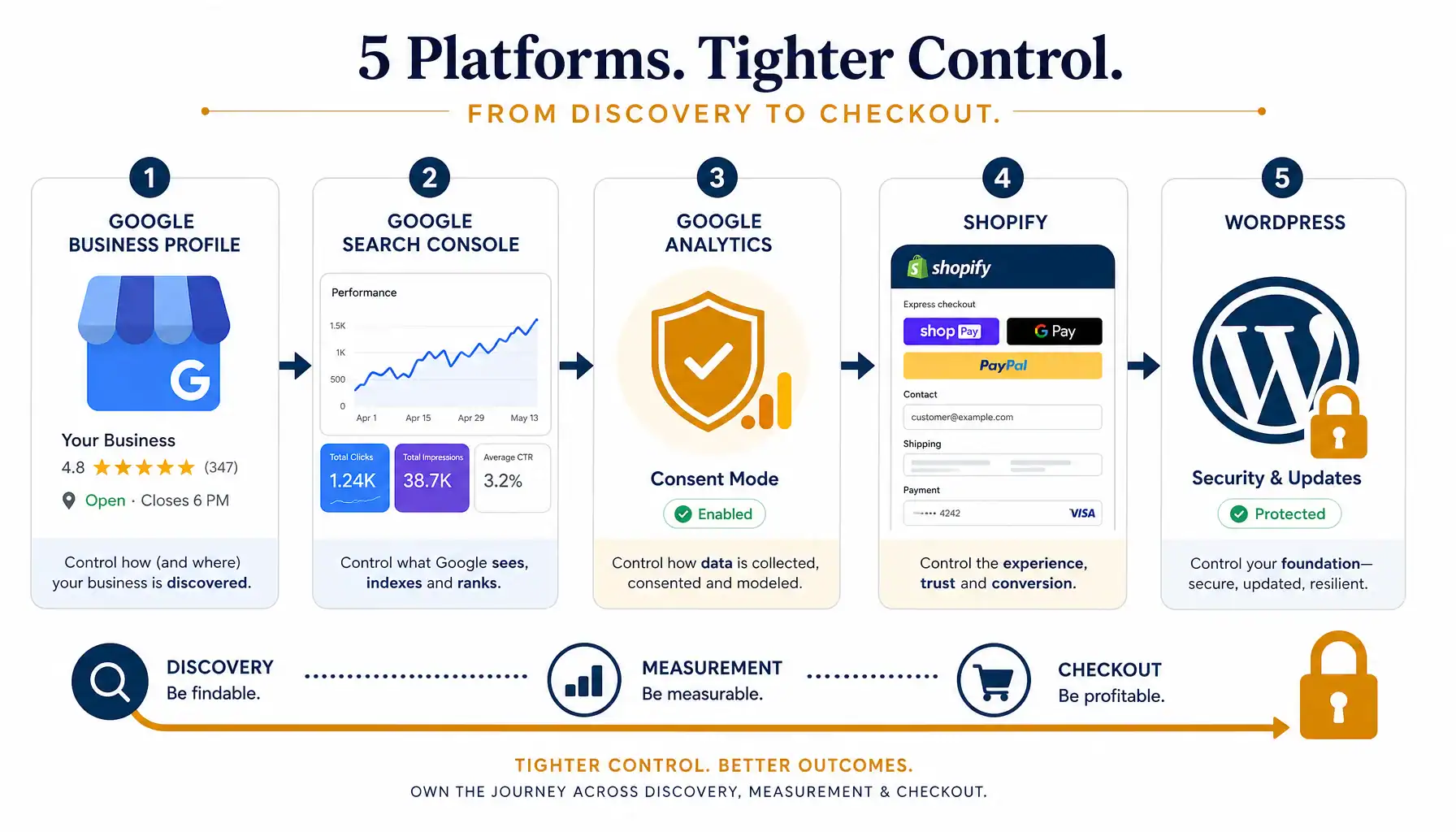
Google is making business profiles more useful inside Gemini, Search Console is now reporting on generative AI visibility, Google Analytics is simplifying consent controls, Shopify is changing checkout disclosure rules, and WordPress security is still reminding site owners that maintenance is part of the job.
1. Google Business Profile is moving closer to Gemini
Google’s new small-business Gemini features say users will soon be able to connect Google Business Profile to Gemini. Google says Gemini can use context such as customer reviews, customer questions and performance data to behave more like a business assistant.
Why it matters: Business data is becoming part of how AI tools understand a company. If your profile is stale or inconsistent, you are giving the system less useful context about what you do and who you serve.
Source: Google Blog — New Gemini app features for small businesses
2. Search Console now shows generative AI visibility
Google Search Central launched Search Generative AI performance reports in Search Console. The reports show impressions, pages, countries, devices and dates for visibility inside AI surfaces such as AI Overviews and AI Mode.
Why it matters: Search visibility is no longer just about classic blue-link rankings. If content is appearing in AI-shaped experiences, you now have a reporting path to see which pages are being surfaced and where the gaps are.
Source: Google Search Central Blog — Introducing Search Generative AI performance reports in Search Console
3. Google Analytics is simplifying its consent controls
Starting June 15, 2026, Google Analytics will use Consent Mode in Google Ads as the single control for data collection and use. Google says the Google Signals setting in Analytics will only control association with signed-in user information for behavioural reporting.
Why it matters: If your consent setup has grown in layers over time, this is the kind of change that can create messy reporting or compliance confusion. A quick audit of banners, tags and Ads-to-Analytics connections is worth doing now.
Source: Google Analytics Help — Updates to Google Analytics Data Controls
4. Shopify is changing checkout disclosure for subscriptions
Shopify’s updated checkout disclosure for subscription purchases goes live on June 22, 2026. Merchants using subscriptions should review the wording in Checkout so the default disclosure matches their setup and does not create surprises at the point of sale.
Why it matters: Checkout is where small points of friction become lost revenue. If the disclosure or wording is out of step with how you sell, it can create hesitation right when the customer is ready to buy.
Source: Shopify Changelog — Updated disclosure for subscription purchases on checkout
5. WordPress supply-chain risk is still very real
Wordfence and BleepingComputer both reported a supply-chain compromise targeting ShapedPlugin, with backdoored premium plugins distributed through official channels. That is the kind of issue that makes routine plugin hygiene and update discipline feel much less optional.
Why it matters: A plugin problem is never just a technical issue. It can become a trust problem, a lead problem and a business continuity problem very quickly, especially if you rely on WordPress for enquiries or sales.
Sources: Wordfence — PSA: Supply Chain Compromise Targets ShapedPlugin and BleepingComputer — ShapedPlugin update flow hacked to infect WordPress sites
What this means for business owners
If your local visibility needs attention, Local SEO and Website Optimization & Analytics are good places to start. If your site runs on WordPress, Website Maintenance & Support keeps the security and update basics in check.
The common thread this week is control: control over what customers see, control over how tracking works, control over checkout behaviour and control over whether your site stays reliable.
That is not a bad thing. It is just a reminder that useful websites need active management, not passive ownership. If your local visibility, analytics or checkout setup is starting to feel harder to manage than it should, that is usually the sign it is time for a proper review.
For the broader AI-search shift, see Big news this week: Google’s AI push, zero-click search and what it means for your website.
Need help making sense of the changes?
If you want a practical review of your website, local visibility, analytics or conversion setup, get in touch with Effortless Web.
Sources used
- Google Blog — New Gemini app features for small businesses
- Google Search Central Blog — Introducing Search Generative AI performance reports in Search Console
- Google Analytics Help — Updates to Google Analytics Data Controls
- Shopify Changelog — Updated disclosure for subscription purchases on checkout
- Wordfence — PSA: Supply Chain Compromise Targets ShapedPlugin
- BleepingComputer — ShapedPlugin update flow hacked to infect WordPress sites